

Walking Safely in the Winter Months
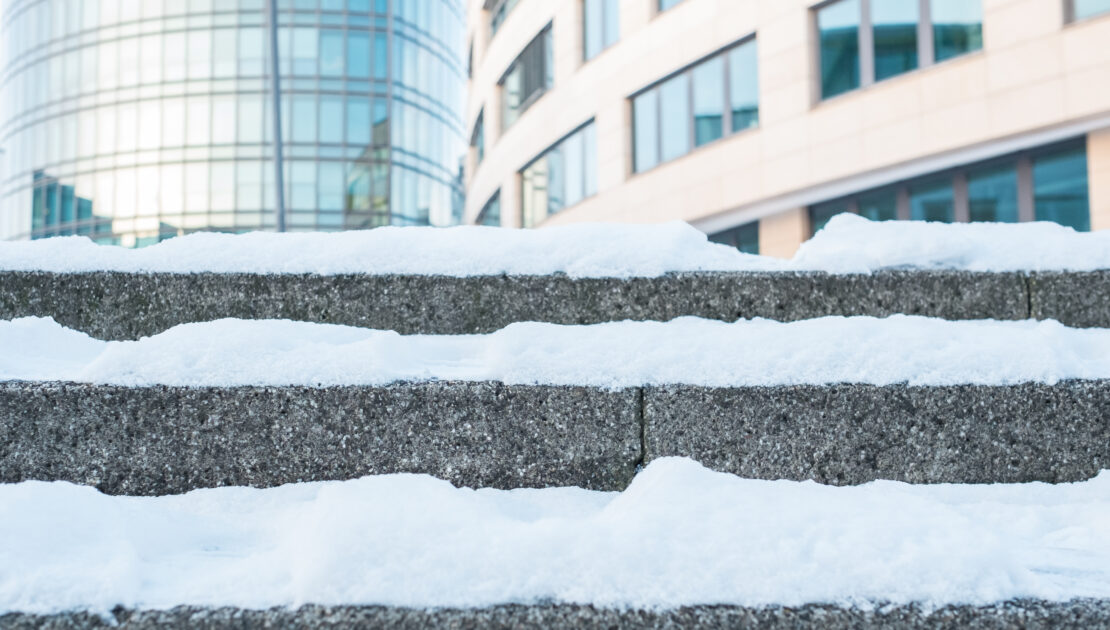
Cold-weather walking surfaces such as parking lots, ramps, stairs and sidewalks pose serious slip, trip and fall risks for workers. Snow accumulation, ice formation and refreezing meltwater are not always visible underfoot, making these hazards easy to miss. Contributing factors like poor lighting, wind-driven precipitation, and workers rushing between locations to escape the cold can further compromise footing and awareness. Follow these steps to help prevent slips, trips and falls in winter.
Safety Tips
- Wear proper footwear. Select slip-resistant footwear with good tread designed for icy conditions. Avoid wearing shoes that are bald and uninsulated. You may also consider buying ice-cleat slip-on accessories for your shoes to increase traction when walking outdoors.
- Remain vigilant when walking outdoors. Be on guard and assume that all pavements could be coated in ice, especially in the early morning or in shaded areas. Watch out for ice near building entrances, loading docks and drainage areas. Be extra cautious on inclines, ramps and stairs, and utilize handrails. Allow for extra travel time.
- Wear attire that supports mobility. Wear a moisture-wicking base layer to keep skin dry and reduce chill from sweat. Avoid overly thick single-layer garments that restrict movement. Use gloves that allow finger dexterity for gripping handrails or vehicle door handles rather than bulky mittens.
- Keep your hands free. Use accessories like backpacks instead of carrying items by hand when possible. Do not use a phone or text while walking on snow and ice-covered surfaces. Keep your hands out of your pockets to make sure that they are free to catch a rail or a nearby fixed object in case you begin to fall.
- Stay safe in parking lots. Park in well-lit, well-maintained areas whenever possible. Keep a hand on your vehicle as you exit the car, taking one slow step after another. Be mindful when walking between vehicles where maintenance trucks were unable to remove snow or apply salt.
- Use proper walking techniques. Take short, slow steps, making sure not to take strides that are too long. Shorter strides allow you to react more quickly to sudden shifts in your center of gravity. Pointing feet slightly outward, a method known as the penguin walk, increases traction. Avoid sudden movements, quick turns, or changes in direction.
- Try to follow these steps if you fall:
- Protect your head first by tucking your chin into your chest.
- Try to relax the body rather than stiffening up, as muscle tension increases the risk of injury.
- Do your best to fall onto your side rather than your spine or tailbone.
- Roll with the fall, pivoting to the fleshiest part of your body, such as your buttocks or thighs.
- Do not attempt to save any items you may be carrying. Landing safely is most important, as you risk bone fractures if you fall suddenly.
- Do not try to catch yourself with outstretched arms, as this action causes many hand, wrist and elbow injuries every year.
Travel Safely Every Time
Walking safely outdoors in the winter months is essential to prevent the slip, trip and fall injuries that are common during colder seasons. Staying aware of surface conditions and following safety practices helps workers reduce the risk of injury and maintain a safer work environment.
Article Published By: Zywave, Inc.
