

Lightning Safety For Outdoor Workers
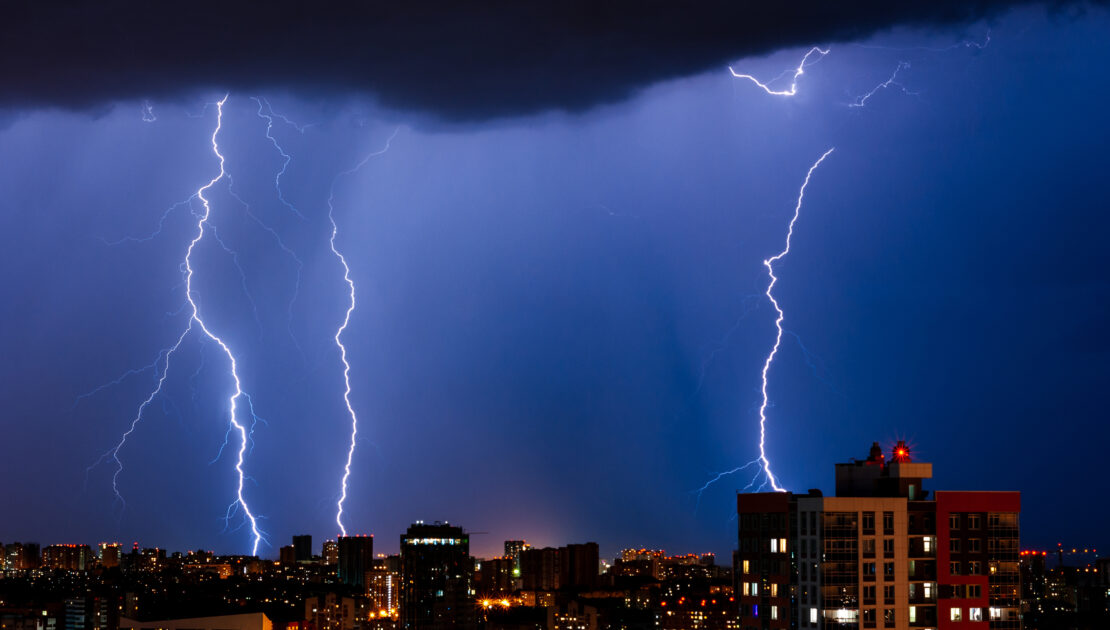
When lightning is present, it poses a significant risk to individuals working outdoors, particularly those in open spaces, near equipment or on tall structures. The risk of lightning strikes is often underestimated by workers, even though 300 people are injured by lightning strikes in the United States every year. Follow these tips to avoid severe injuries.
Safety Tips
- Monitor weather forecasts daily. Plan your day based on the forecast. If thunderstorms are predicted, be prepared to stop work immediately and take shelter.
- Familiarize yourself with your company’s emergency action plan. Have a means to communicate with your team, know your designated shelters and designated response times, and know the established criteria for suspending and continuing work.
- Do not wait for rainfall to seek shelter. Lightning can strike up to 10 miles away from rainfall. If an indoor shelter is unavailable, the best place to be is inside your work vehicle. The hard, metallic roof of your vehicle forms a protective cage around you. If seeking shelter in a vehicle, roll up the windows.
- Follow the phrase “when thunder roars, go indoors.” Now used by the Centers for Disease Control and Prevention and the National Weather Service, this phrase reminds workers that if you can hear thunder, you are within range of potential lightning strikes.
- Avoid areas of poor refuge. If possible, do not seek shelter in tents, underneath pavilions, in baseball dugouts or on porches, as these areas do not provide adequate protection from lightning strikes.
- Avoid open areas. This includes hilltops and flat fields. In open fields, you are often the tallest object, making you a suitable lightning rod. If stuck in an open field, do not lie flat; instead, minimize your ground contact, crouch and seek the lowest possible elevation.
- Space yourself out from co-workers. If caught outside with other workers during a thunderstorm, space yourselves out to reduce the risk of multiple injuries from a single strike. Lightning can “jump” between two people who are standing too close to one another.
- Stay away from tall or isolated objects. Trees, utility poles, towers, cranes and other large stand-alone structures might act as lightning rods.
- Keep your distance from water. Lakes, ponds, pools and even puddles are all conductors of electricity and can be incredibly dangerous during thunderstorms.
Avoid contact with metal objects and equipment. Metallic objects, including fencing, scaffolding and even metal tools, are conductive equipment that increases your risk of being struck by lightning.
Work Safely Every Time
While not always fatal, lightning strikes can cause severe and permanent damage and injuries to you and your co-workers. When you hear thunder, seek refuge and avoid any metallic or tall structure that may attract lightning. Know your company’s safety protocols and emergency procedures.
Article Published By: Zywave, Inc.
